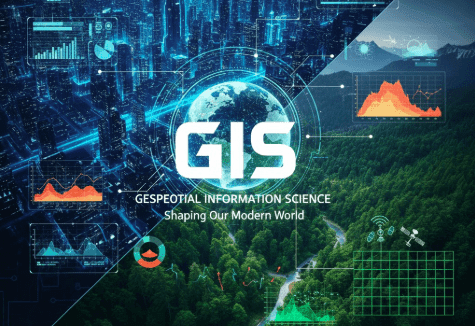
The Geospatial Information Science is no longer a niche field of research but a key driver of technology in the 21st century that overlays geography, computer science, remote sensing, data analytics, and satellite technology.
Contemporary spatial intelligence relies heavily on Geospatial Information Science, which provides governments, international organizations, researchers, and even major technology companies with the data that everyone requires when making effective decisions.
It can be the tracking of climate change, the mapping of safe travel destinations, mapping outbreaks of various diseases, predicting natural calamities, and it is the foundation of all crucial knowledge.
The article explores heavily one of the aspects of Geospatial Information Science with an authoritative outlook. It features a high level of organization and maintenance of the high-quality standards of professional and SEO-oriented publications.
What Is Geospatial Information Science?
Geospatial Information Science is a field that studies and uses the instruments that capture, store, analyze and interpret data that is associated with places on the Earth. These systems are Geographic Information Systems, Global Navigation Satellite Systems, satellite and drone remote-sensing systems, spatial databases, and advanced analytics software.
Categorically, this discipline aims at addressing four main questions: there is no question of where something is situated. Why is it there? What is happening around it? And what might happen next? Geospatial Information Science has transformed the way science is conducted, surveillance in security systems, and navigation as well as environmental planning across the globe by associating data with geographic positions.
Trusted educational and institutional sources provide excellent foundational knowledge, including:
These sites contain valuable open data, tutorials, and practical examples which can be useful to those who want to get deeper insights.
The Historical EvolutioDiscovering the Power of Geospatial Information Sciencen of Geospatial Science
The roots of geospatial intelligence stretch back thousands of years, when early civilizations attempted to map their territories. But the major transformation began in the mid-20th century after the advancement of computing and satellite technology. Remote sensing satellites such as Landsat, introduced in 1972, played a massive role in digitizing Earth observation.
The Landsat, which is currently serving as its ninth platform, has been providing constant environmental pictures over the decades, making it one of the oldest missions in the history of Earth observation. However, more recent systems, such as the European Sentinel satellites, can offer high-resolution data updated every five days, which has had a radical impact on scientific monitoring functions.
Those innovations came along with some of the most advanced GIS infrastructure, such as ArcGIS by ESRI, the open software QGIS, and Google Earth Engine, enabling spatial analysts to find a needle in a haystack of data and make meaningful visual stories about informed decision-making.
Today, Geospatial Information Science is at the center of all things, including the design of global infrastructures and the defense of a nation, as well as the cultivation and management of natural resources or environmental policy.
Core Components of Geospatial Information Science
Geographic Information Systems
One of the most popular components of Geospatial Information Science is Geographic Information Systems (GIS). They are devices and computer programs that allow individuals to store, examine, view, and process spatial data. The modern GIS systems are capable of performing advanced operations such as geoprocessing, spatial modelling, network routing, as well as real-time tracking to assist in the intricate examination procedures.
Remote Sensing Technology
One of the most popular aspects of Geospatial Information Science is Geographic Information Systems (GIS). They comprise instruments and software structures that allow users to store, analyze, visualize, and interpret spatial data. Current GIS systems have evolved to support complex processing of analysis as well as provide advanced geoprocessing, spatial modeling, network routing, and real-time tracking.
Organizations like NASA and NOAA operate some of the world’s most advanced Earth observation satellites.
Global Navigation Satellite Systems
Global Navigation Satellite Systems, e.g., GPS, GLONASS, Galileo, and BeiDou, provide a very precise positioning and navigation. They are also used in the aviation industry, marine transport, and military activities, as well as in geodetic surveying, in addition to being used to power smartphones.
Spatial Data Infrastructure
Strong infrastructures are required in the management, storage, accessibility as well as sharing of spatial data. In order to ensure standard accessibility to geographic data, most countries have established National Spatial Data Infrastructures.
Applications of Geospatial Information Science in the Modern World
Geospatial Information Science is an inseparable part of almost all large industries, which has established it as one of the most powerful scientific fields of the time.
Urban Planning and Smart Cities
Geospatial analytics play a major role in urban planning. Through the power of spatial data, cities optimize road networks, design housing to be environmentally friendly, improve garbage collection, and strategically placement of the most important services, including schools and hospitals. Traffic surveillance, emergency response, infrastructure maintenance, and public security programs in smart-city ecosystems use geospatial data.
The best-known example of such is the Singapore version of the Smart Nation program with pervasive geospatial technology application – the details may be located at Smart Nation Singapore.
Environmental Monitoring and Climate Research
Geospatial Information Science is highly effective in unravelling the dynamics of climate, mapping the loss of forests, assessing the habitats of wildlife, and monitoring water resources. It is through the use of satellite imagery that researchers are able to track the glaciers receding, the rise of the sea level, and the path of wildfires. The knowledge that is generated by institutions like the European Space Agency has become indispensable in the process of formulating the climate negotiations and steering the way in environmental policy decisions.
Agriculture and Food Security
Precision agriculture is the application of geospatial technologies to monitor soil health, the growth of crops, gauge the level of irrigation needs, and identify the presence of pests. The farmers depend on these technologies to increase their yields, reduce wastes, and streamline water consumption. GIS-based mapping by international agencies, including the FAO, is applied to enhance food distribution and land management as well as avert crop failures.
Public Health and Epidemiology
Using geospatial data allows scientists to determine hotspots of outbreaks, research the spread of diseases, and educate about specific measures during vaccination. The World Health Organization regularly utilizes GIS in monitoring the health risks around the globe.
Transportation, Logistics, and Navigation
Organizations like Uber, DHL, Amazon, and global airlines are also using spatial analytics to optimize routes, reduce fuel consumption, and increase fleet safety. The current navigation applications, which are developed based on high-accuracy geospatial data sets, have transformed the way people commute and travel.
Disaster Management and Emergency Response
Whether it is floods, earthquakes, tsunamis, or hurricanes, geospatial Information Science is necessary to address natural disasters. Early-warning mechanisms work using satellite images, and emergency operators rely on geospatial maps in order to determine safe roads and sketch out affected areas.
A variety of global geospatial crisis tools, both real-time and operational, are available in the UN Disaster Management portal.
Geospatial Information Science and the Power of Artificial Intelligence
AI-Driven Image Analysis
AI has become a necessity when processing the satellite imagery. Machine-learning models are able to identify forest degradation, reveal illegal mines, map flood-prone regions, or classify land cover with incredible accuracy and improve tenfold on environmental monitoring and agriculture forecasting.
Predictive Analytics and Future Modeling
AI can predict forthcoming occurrences, including weather-related disasters, urban sprawl, epidemics, and the state of the economy by analyzing historic geoscientific data. This ability in modeling provides the governments with robust resources to measure risks and be prepared ahead.
These are the findings of the research on AI and geospatial technology you can find here:
Automation in Geospatial Data Processing
This is made possible through automation of tasks such as map creation, classification and change detection, cutting down on the time required to process massive data volumes, what used to take months to process can now be done in the shortest amount of hours introducing geospatial to more people than ever before.
Future Trends in Geospatial Information Science
Geospatial Information Science is on a path of transformation influenced by rapidly emerging technologies that enable a deeper, more detailed conception of our physical world.
4D Time-Based Mapping
The inclusion of the time dimension allows 4-D mapping to allow scientists to observe the changes in landscapes over time, both in decades and centuries, revealing shifting coastlines, growing cities, erosional patterns, and changing climate patterns.
Augmented Reality and Immersive Geospatial Experiences
The geospatial data and the physical world are combined in augmented reality platforms to deliver an immersive experience that can be used in various fields, such as assisting travelers and defining architectural space, to augment military training situations, and to make it easier to navigate the field.
Autonomous Vehicles and High-Definition Mapping
Precise spatial information – The centimeter level of accuracy is imperative in autonomous cars. The maps are in high definition to show road curvature, elevation, and the width of the lanes and surrounding features, which are irreplaceable for safety and performance.
Geospatial Blockchain Solutions
Geospatial transactions and land titles, as well as other spatial information, may be recorded and authenticated using blockchain in the next several years.
Career Opportunities in Geospatial Information Science
The global demand for talented geospatial professionals is mounting around the world as governments, commercial entities, research entities, the military, and environmentalists are all inclined to GIS, remote sensing, and spatial analytics specialists.
Students are able to get started with their learning journey on many of the notorious platforms, including:
The roles that the industry has provided are very varied, such as GIS analysts and geospatial developers, cartographers, environmental modelers, remote-sensing specialists, spatial database managers, and location-intelligence scientists.
Frequently Asked Questions of Geospatial Information Science
What are the skills that are relevant in Geospatial Information Science?
It is a field that demands a combination of skills. You must have the capability of analyzing Spatial data, drawing concise visual maps, and comprehending remote sensing images. It is also essential because of experience in the field of geostatistic techniques and computer tools, including GIS software. It is beneficial to have good analytical thinking and be aware of the precise field of study.
Does it have publicly available geospatial data?
Yes. The European Space Agency, NASA, and the US Geological Survey are some of the various federal bodies providing free access to satellite imagery, climatic, and topographical data, which any person may obtain by downloading the information.
Is GIS easy to learn by beginners?
Absolutely. It has easy to use applications such as Google Earth Engine and QGIS, which allows one to view the maps and spatial data without the advanced programming skills required.
What is the role of Geospatial Information Science in climate change?
It monitors glacier melting, rising sea levels, droughts, risk of wildfires, and loss of forests by mapping the way the environment changes. These maps assist in making the most appropriate decisions by scientists and decision makers.
Can Geospatial Information Science be of any use to businesses?
Yes. Businesses use it to simplify supply channels, map property developments, locate customers, profile markets, and carry out marketing based on the residential locations of their clients.
Read More: Essential Artificial Intelligence Scope in Pakistan 2025